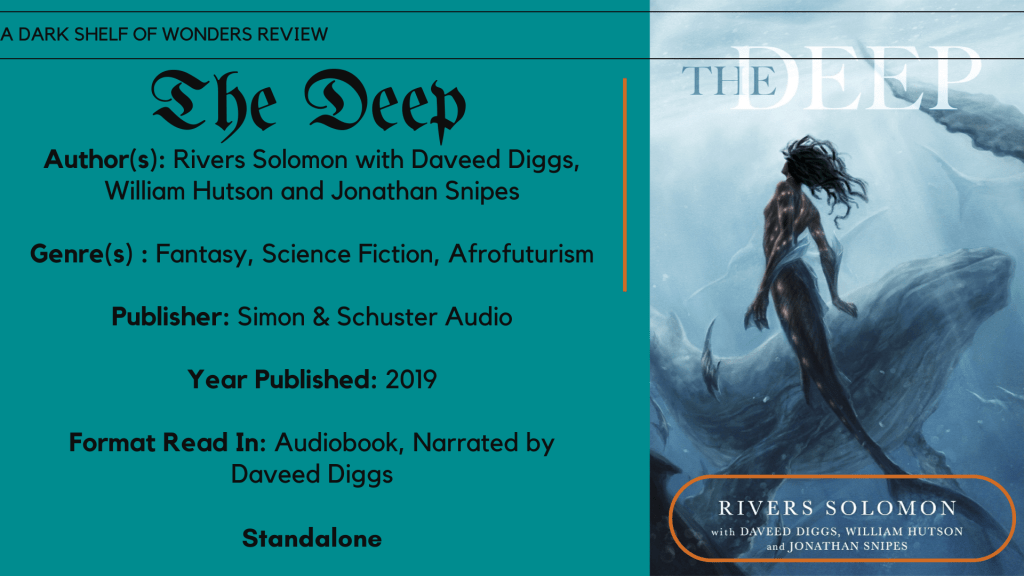
Cover Artist: Micah Epstein
Synopsis
The Wajinru are water-breathing descendants of pregnant African slave women that were tossed overboard and they have survived in underwater colonies for generations. As their Historian, Yetu is tasked with holding the memories of their past and their identity in order for the rest of the community to live happily and in the present. Only once a year does Yetu share the memories with the Wajinru people; the rest of the time she finds herself quickly wearing away under the weight of the remembrances. To save herself and her people, she must come to terms with both the past and their future — easier said than done.
Pace: Medium, Character-driven
Tone: Moving, Thought-Provoking
Review:
I’ve recently come to appreciate novellas; this one packed a punch in under 200 pages, and I can’t stop thinking about it! It is unlike anything I’ve ever read because it’s such a collaborative story in both its conception and execution. The story itself begins with the Afrofuturist myth created by the musical band Drexciya through their albums. The myth centers around the premise of a utopian underwater civilization founded by African mothers thrown overboard from slave ships. The experimental hip-hop band “clipping.” then used that as the inspiration for their song ‘The Deep’, which was then expanded upon by Rivers Solomon in this novella.
Listening to this song enhanced the experience for me as I loved being able to include a layer of music into my reading experience. Additionally, since I listened to the audiobook narrated by clipping’s Daveed Diggs, it brought the collaborative process full circle. I am convinced this is the best way to fully appreciate this story.
The writing style was lyrical and read like folklore. In The Deep, we meet more than one Historian across time, from before the founding of the Wajinru society to the current historian Yetu. The various historians’ use of the plural, first-person pronoun ‘We’ in their scenes adds so much depth to the world-building. It reflects how the Historians experience every ancestor’s memories at the same time so that each subsequent Historian carries ever more layers of cultural identity making it harder for each one to retain their individuality. The ‘We’ is also clearly a nod to the creative process of the book.
“What is belonging?” we ask.
She says, “Where loneliness ends.”
Like many readers in this consumer-driven world, one of the main things I think about when considering purchasing books is their re-readability. Honestly, this little novella is so theme-rich that I think readers will gain much insight per re-read. It examines topics such as intergenerational trauma, individuality vs. community, memory, diaspora, the destruction of ecosystems by humans, the creation or dissemination of language and so much more. I was particularly captivated by the way Solomon depicted Yetu’s struggle between the pain of remembering and the pain of forgetting. This struggle affected so many aspects of Yetu’s journey— from her choices, her relationship with her elders, and even her relationships with strangers in a different land. Tracing this character’s growth was by turns harrowing and liberating but she (and this book) will stay in my heart for a very long time.
| Rating Categories | Rating (1-5 ⭐) |
|---|---|
| Characters | ⭐⭐⭐⭐⭐ |
| Plot | ⭐⭐⭐⭐.5 |
| Writing Style | ⭐⭐⭐⭐⭐ |
| World-Building | ⭐⭐⭐⭐.5 |
| Enjoyment | ⭐⭐⭐⭐⭐ |
Representation
Black, Non-Binary, Lesbian
Content Warnings
Mentions of slavery,
Psychic trauma,
Intergenerational trauma,
Death, Grief,
Suicidal Thoughts,
Pregnancy
Afrofuturism BIPOC Fantasy LGBTQIA+ Mermaids Own-Voices Science Fiction Speculative Fiction
 Dark Shelf of Wonders
Leave a comment